Field Log · 01·E
Geopolitical
Journal
Dispatches on Narrative & Power
An active, living repository for shorter analyses, contemporary commentary, and immediate reflections on the intersection of literature, mass media, and statecraft.
Three lines of inquiry
- 01
Popular Geopolitics in Real-Time
Analyzing how current geopolitical events and civilizational divides are framed by mass media and public discourse.
- 02
The Spatial Humanities
Brief explorations into how borders, internal migration, and physical geographies are continually reimagined in contemporary culture.
- 03
Tropes & Statecraft
Deconstructing the rhetorical shortcuts and narrative frameworks used by policymakers to justify or explain global strategy.
National Security Cinema
Hollywood as a Geopolitical Apparatus — reading the spatialization of threat in modern film.
When analyzing how global power dynamics are constructed through narration, it is impossible to ignore the cinematic topography of Hollywood. While my primary datasets often focus on literary fiction, visual media serves as a highly potent infrastructure for manufacturing geopolitical consent. Drawing on Klaus Dodds’ Geopolitics: A Very Short Introduction (2019), this dispatch maps how Hollywood shifted its geographical imagination to spatialize the “enemy” across distinct geopolitical eras.
Read the full essay : National Security Cinema — opens in a new tab- 1940s–1950s
The Early Cold War: Anti-Communist Paranoia
A porous boundary between industry and state. The CIA secretly funded Animal Farm (1954); sci-fi like The Thing (1951) and Red Planet Mars (1952) weaponized alien invasion as a metaphor for communist infiltration; My Son John (1952) moved the ideological battle into the American home; The Longest Day (1961) showed active Pentagon–cinema cooperation.
- 1950s–1960s
Subverting the Cold War Consensus
High Noon (1952) as a structural critique of HUAC blacklists; It Came from Outer Space (1953) inverted the alien-invasion trope to condemn small-town xenophobia; On the Beach (1959) and Kubrick’s Dr. Strangelove (1964) dismantled and ridiculed mutually assured destruction.
-
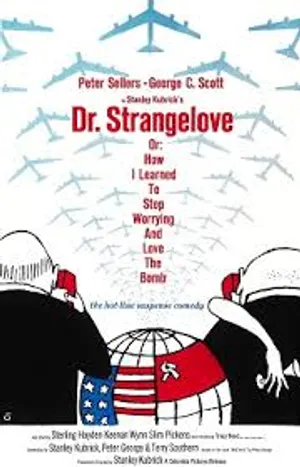
Dr. Strangelove 1964
-
- 1980s
The Late Cold War: Hypermasculinity & Resurgence
A triumphalist aesthetic: Top Gun (1986), Firefox (1984), Rambo: First Blood Part II (1986). Red Dawn (1984) modeled the ultimate spatial violation — a joint Soviet–Cuban invasion of the American Midwest.
-
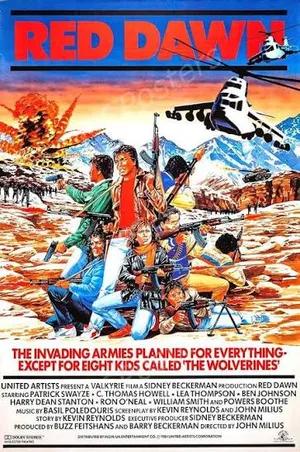
Red Dawn 1984
-
- 1980s–1990s
Post-Cold War Chaos: Shifting the Enemy Geography
GoldenEye (1995), The Peacemaker (1997) and Air Force One (1997) spatialized the former Soviet bloc as a chaotic vacuum; The Hunt for Red October (1990) softened the Russian adversary. Iron Eagle (1986), Navy SEALs (1990), The Siege (1998) and Rules of Engagement (2000) shifted the backdrop to the Middle East. Speed (1994) and The Rock (1996) turned to domestic terrorism.
-
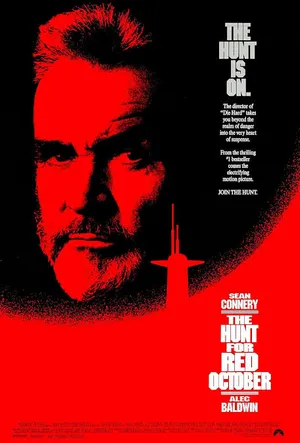
The Hunt for Red October 1990 -
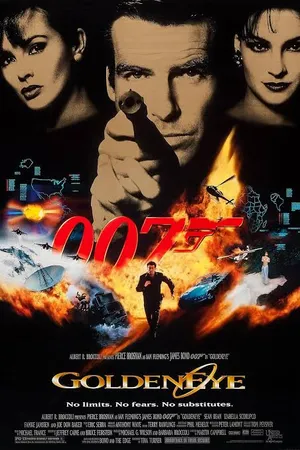
GoldenEye 1995 -
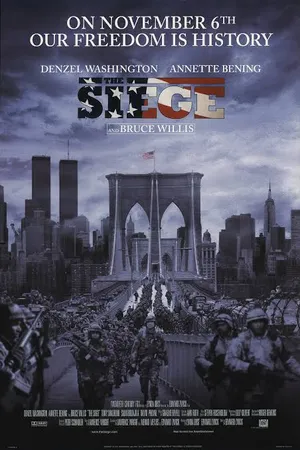
The Siege 1998
-
- 2001–2006
Post-9/11: Trauma and the War on Terror
Collateral Damage (2002) and The Sum of All Fears (2002) anticipated attacks; United 93 (2006) and World Trade Center (2006) processed trauma; Behind Enemy Lines (2001) argued for unilateral action; President George W. Bush referenced Kandahar (2001) to justify intervention; Michael Moore’s Fahrenheit 9/11 (2004) attempted direct electoral intervention.
Pop culture is never merely a reflection of the times; it is active narrative infrastructure. By continuously re-mapping geopolitical tropes — from the godless communist to the chaotic rogue state — Hollywood has helped shape the American public’s geographical imagination and manufacture consent for shifting global strategies.