When analyzing how global power dynamics are constructed through narration, it is impossible to ignore the cinematic topography of Hollywood. While my primary datasets often focus on literary fiction, visual media serves as a highly potent infrastructure for manufacturing geopolitical consent.
Drawing heavily on the frameworks outlined in Klaus Dodds’ Geopolitics: A Very Short Introduction (2019), this dispatch categorizes the evolution of “national security cinema.” By mapping how Hollywood has historically shifted its geographical imagination, we can observe the deliberate spatialization of the “enemy” and the use of film to rationalize American foreign policy across distinct geopolitical eras.
I. The Early Cold War: Anti-Communist Paranoia (1940s–1950s)
During this period, the boundaries between the entertainment industry and the state apparatus were remarkably porous. Hollywood collaborated directly with government agencies to cultivate a domestic fear of Soviet subversion and communist infiltration.
- Covert Funding & Metaphorical Threats: The CIA secretly funded the animated adaptation of Animal Farm (1954) to critique the Russian Revolution. Simultaneously, science fiction served as a subtle geopolitical proxy. Films like The Thing (1951) and Red Planet Mars (1952) weaponized the fear of extraterrestrial invasion as a direct metaphor for communist infiltration.
- The Domestic Frontline: My Son John (1952) moved the ideological battleground into the American home, warning of the vulnerability of American youth to Marxist ideologies.
- The Pentagon Partnership: The Longest Day (1961) highlighted active military-cinematic cooperation, enjoying heavy Pentagon backing (even as real-world crises in Berlin temporarily disrupted military availability on set).
II. Subverting the Cold War Consensus
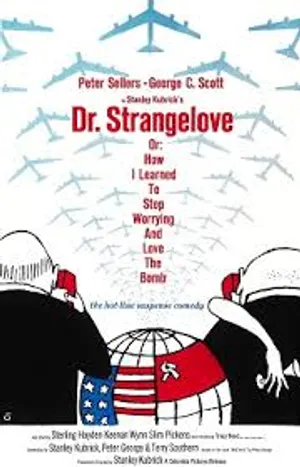
Not all narrative discourse served the dominant conservative strategy. Several filmmakers utilized their platforms to critique the nuclear arms race and the xenophobia driving the House Un-American Activities Committee (HUAC).
- Satirical Pushback: High Noon (1952) operated as a structural critique of the HUAC blacklists, while It Came from Outer Space (1953) inverted the alien invasion trope to condemn small-town American xenophobia.
- Questioning Deterrence: The strategic logic of mutually assured destruction was effectively dismantled in On the Beach (1959), which depicted the bleak reality of nuclear annihilation, and famously ridiculed in Stanley Kubrick’s Dr. Strangelove (1964).
III. The Late Cold War: Hypermasculinity & Resurgence (1980s)
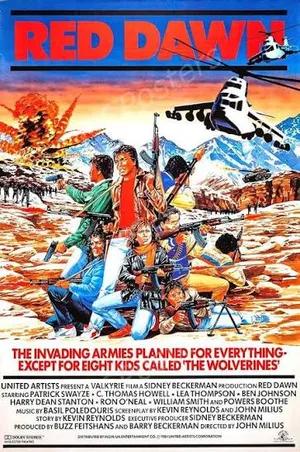
As Cold War anxieties were reignited under the Reagan administration, cinematic narratives pivoted away from existential dread and toward aggressive, hypermasculine statecraft and technological superiority.
- The Triumphalist Aesthetic: Films such as Top Gun (1986), Firefox (1984), and Rambo: First Blood Part II (1986) operated as celebrations of American military prowess against largely unnamed or explicitly communist adversaries.
- The Ultimate Spatial Violation: Red Dawn (1984) modeled a theoretical worst-case geopolitical variable: a joint Soviet-Cuban invasion of the American Midwest, neutralizing traditional military structures to rely on the patriotic insurgency of local high school students.
IV. Post-Cold War Chaos: Shifting the Enemy Geography (1980s–1990s)
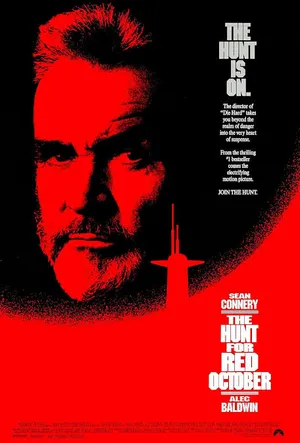
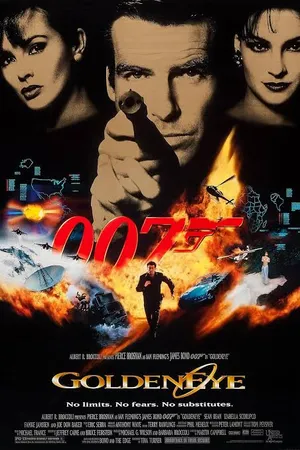
With the collapse of the Soviet Union, the geopolitical binary of the Cold War dissolved. Hollywood was forced to rapidly re-map the global threat architecture, pivoting toward the Middle East, rogue states, and post-Soviet fragmentation.
- The Fractured East: Films like GoldenEye (1995), The Peacemaker (1997), and Air Force One (1997) spatialized the former Soviet bloc not as a unified empire, but as a chaotic vacuum generating rogue terrorism and arms trafficking. Conversely, The Hunt for Red October (1990) softened the Russian adversary by depicting a Soviet captain defecting in pursuit of the “American Dream.”
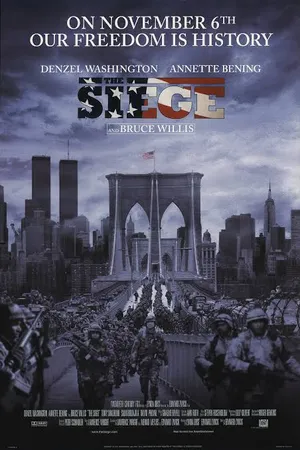
- The Middle Eastern Tropes: Iron Eagle (1986) and Navy SEALs (1990) began heavily shifting the narrative backdrop toward the Middle East. By the late 90s, The Siege (1998) and Rules of Engagement (2000) sparked significant backlash for cementing a reductive, anti-Western trope of Arabs and Muslims, effectively laying the cultural groundwork for post-9/11 policies.
- The Domestic Terror Threat: Speed (1994) and The Rock (1996) briefly turned the lens inward, exploring domestic terrorism executed by disenfranchised American military and law enforcement personnel.
V. Post-9/11: Trauma and the War on Terror
The cinematic output surrounding 9/11 served dual purposes: providing national catharsis and justifying a unilateral global response.
- Foreshadowing & Catharsis: Collateral Damage (2002) and The Sum of All Fears (2002) eerily anticipated catastrophic attacks on American soil. Later, United 93 (2006) and World Trade Center (2006) processed the real-world trauma by focusing strictly on American heroism and victimhood.
- Validating Unilateral Statecraft: Behind Enemy Lines (2001) argued a distinct geopolitical thesis: that American exceptionalism requires unilateral military action, even if it means ignoring international mandates.
- Direct Geopolitical Utility: Visual media’s role in policy was explicitly confirmed when President George W. Bush referenced the Iranian film Kandahar (2001) to publicly justify US military intervention against the Taliban. Meanwhile, Michael Moore’s Fahrenheit 9/11 (2004) attempted unsuccessfully to utilize documentary film as a direct intervention in the 2004 presidential election.
Concluding Thoughts
What Dodds’ analysis reveals is that pop culture is never merely a reflection of the times; it is active narrative infrastructure. By continuously re-mapping geopolitical tropes — from the godless communist to the chaotic rogue state — Hollywood has played a foundational role in shaping the American public’s geographical imagination and manufacturing consent for shifting global strategies.